
If you’ve ever walked into a Jewish Shiva or house of mourning, it can be quite overwhelming, especially if you’re not familiar with the customs that are practised during the mourners’ period of shiva. You will probably stand at the front entrance, feeling so down for your friend who is grieving, but you are asking yourself millions of questions: Should I knock? Should I bring flowers? What do I say to a person whose parent or spouse has just died? You will no doubt feel a little guilt (aka funeral friction) because you want to be respectful and do the right thing, but you’re worried about making an error as well. The period called Shiva has specific types of traditions and “rules,” but the idea behind Shiva is very simple; the goal is to surround the mourners with a loving community of family and friends so they are not left alone during their time of grief. Let’s explore how to understand and participate in these traditions together, so you will be able to enter that home with love and compassion.
What Exactly is Shiva?
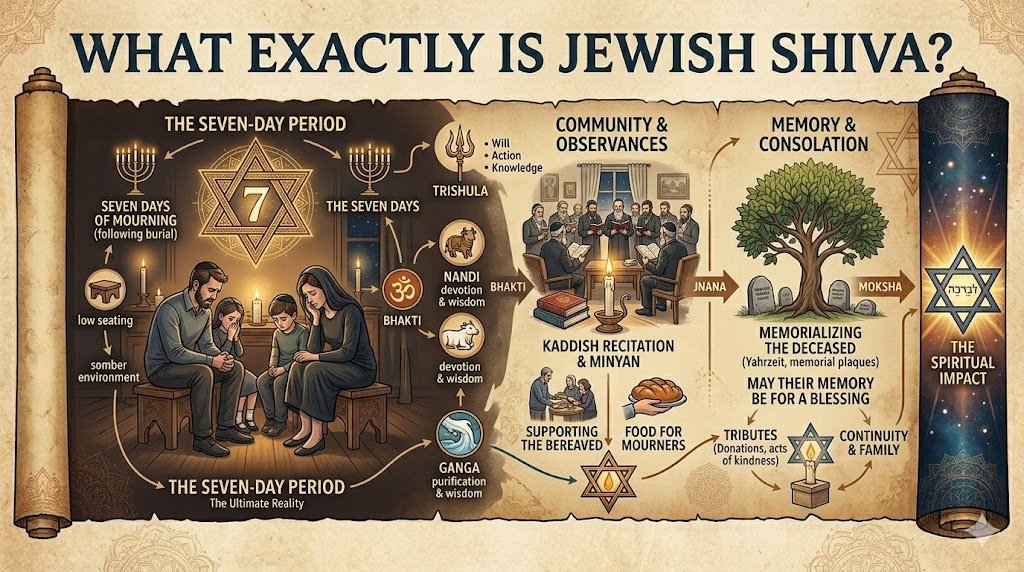
The word Shiva, which stands for the number seven in Hebrew, is the name given to the seven days of mourning that commence immediately following the burial of someone who has died. The immediate family of a deceased person including both parents and children, spouses and siblings, will remain in their home during the seven-day period of mourning, which is known as sitting Shiva.
Sitting Shiva has two main purposes, it provides a structured and safe environment for the mourners to begin to cope, recover from and process the overwhelming and profound sadness of their loss; while at the same time providing the community with the opportunity to provide comfort and support to those who are grieving. When someone dies, they may have an overwhelming number of tasks to accomplish. This period provides them with a break from the rest of the world so they can focus exclusively on their grief.
Key Traditions You Will Notice
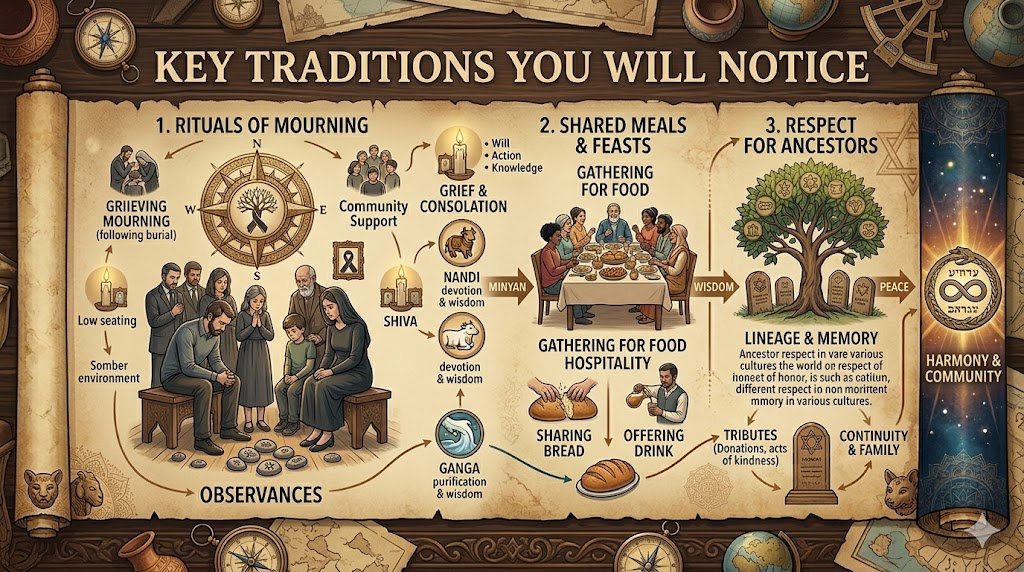
Some visual symbolism may stand out when visiting a Shiva home, and this is done to honour the deceased and be in mourning:
- Door is left unlatched or ajar: When guests come to visit the Shiva house, they can enter without disturbing the mourners. When a visitor arrives, the hope is not to disturb the mourners and allow them to be grief stricken and sit quietly without having to be forced into “hosting” their guests by answering the door.
- Mirrors are usually covered: Covering mirrors serves to reduce the focus on the outward appearance of the person who has passed away. It also allows for greater potential that the person who has died will have his memory instilled more deeply.
- Low stools: The person/s mourning may be sitting on low stools or the floor. This physical representation reflects their grieving state of “low” or “to be burdened”.
- Memorial Candle: A memorial candle (either a 24 hour or a 7(day) candle) will be lit for 7 days to represent the soul of the deceased (soul is often equated as a candle flame that flickers).
What to Bring (and What to Leave at Home)

Many visitors get confused about what to bring when attending the home of the bereaved. Traditionally, Jews view their role during this time as providing support for the mourners rather than making the place pretty.
1. Food is How We Show Love
Unlike many cultures that offer thoughts and prayers, we bring food, such as bagels and brisket. The intent behind food is that by providing ready-to-eat food, mourners do not need to put energy into planning, shopping, and cooking to feed themselves or their guests.
- An example of “ready to eat” would be platters of fruit, deli trays, and baked goods; all items normally purchased at the grocery store.
- If you want to bring food, check with the bereaved family before showing up with it to avoid being disrespectful.
- If you do not know whether to bring meat or not, the safest option is always dairy or vegetables if bringing food for a mixed group of Jews and non-Jews.
2. Flowers Are Not Appropriate
In contrast to many Western cultures, flowers are not customary at a Jewish funeral or Shiva. Flowers are generally viewed as a symbol of life and beauty that eventually die, which creates a painful reminder of the loss of life for those in mourning.
The focus at the funeral home/Shiva is on remembering the deceased eternally (rather than creating a temporary celebration). If you want to honour someone who has passed away, giving Tzedakah is considered to be a far greater honour than giving flowers.
How to Behave: The Quiet Protocol
Etiquette for making a Shiva call is unlike attending a social affair or a wake in that the objective of the recipient is not to have “small talk” but rather to let there be silence. Silence is considered appropriate.
| Aspect | The Custom | Why? |
| The Entrance | Enter quietly; don’t wait to be greeted | The mourners should not have to play host |
| Initiating Talk | Wait for the mourner to speak first | This lets them set the tone they may want to talk, or they may want silence |
| Conversation | Keep the focus on the deceased | Sharing a funny or sweet story about the person who passed is a huge gift to the family |
| The Exit | Keep it brief 20 to 30 minutes | Shiva homes can get crowded and exhausting for the family |
For how you might say something if you don’t know what else to say: “I’m so sorry for your loss”. A traditional comforting statement in Hebrew is “May the Almighty comfort you amongst the other mourners in Zion and Jerusalem.”
Showing Support Beyond the Seven Days
The first week after Shiva is typically the most difficult period of grieving due to the quiet atmosphere and lack of visitors and food supplies, so it is recommended to contact the family again (day ten) after the initial week of phrases and nice things has passed and express your concern in saying that you have been thinking of them since the “noise” has passed.
- Be “Specific”: Instead of asking “If you need help just let me know” be specific. For example, “I am going to get groceries, can I stop and bring you milk and eggs?”
- Mark Your Calendars: When someone passes, find out when the person passed away. One year after the death (Yahrzeit) is a significant time for you to reach back to the family to remind them that they are still thinking about their loved one.
Conclusion
The most important thing in navigating Shiva customs is showing up instead of trying to create the “right” words or gift. The fact that you are there showing your friend that you are willing to just be with them, even if it is in silence, is so important! Rabbi Ron Borden often reminds us that shiva is really about community and the ability to not take away someone’s pain, but to support that individual in carrying their pain alone. When you follow these customs, you are helping your friend make that transition from mourning back to life.
FAQs
Do I need to be Jewish to visit a Shiva home?
Absolutely not! A Shiva call is primarily about providing support to the living. Your presence is an expression of respect for the person who died and a means of providing comfort to your friend/colleague. The family is grateful that you took the time to be supportive. Knowing any Hebrew or being familiar with prayers is inconsequential to being a support for someone who is in need.
Is there a “right” time to arrive?
Many families will let you know specific times when they’ll accept visitors during Shiva (e.g., 1:00 PM – 4:00 PM and 6:00 PM – 9:00 PM). If possible, try to stay within the designated visiting hours after that time, the family may be resting, eating, or performing private prayers. If you are unsure of the correct visiting hours, it is best to check with a close friend of the family or visit the funeral home website.
What should I wear?
It is not necessary to wear a formal outfit (black suit and/or veil) but it is nice to be respectful at the funeral with your clothing choice. “Business casual” type outfits or what you would wear to an intimate dinner should reflect a somber color/tonality without being too extravagant.
What if I did not know the person who passed away?
This is a normal concern! When you support a friend who has lost someone they love but have not met, tell the person, “I did not ever get to meet your [father/mother/brother], but from how much they meant to you, I can see they were an incredible person.” You are there for the bereaved person to ‘bear witness’ to their sadness, and that is an important present in and of itself.


